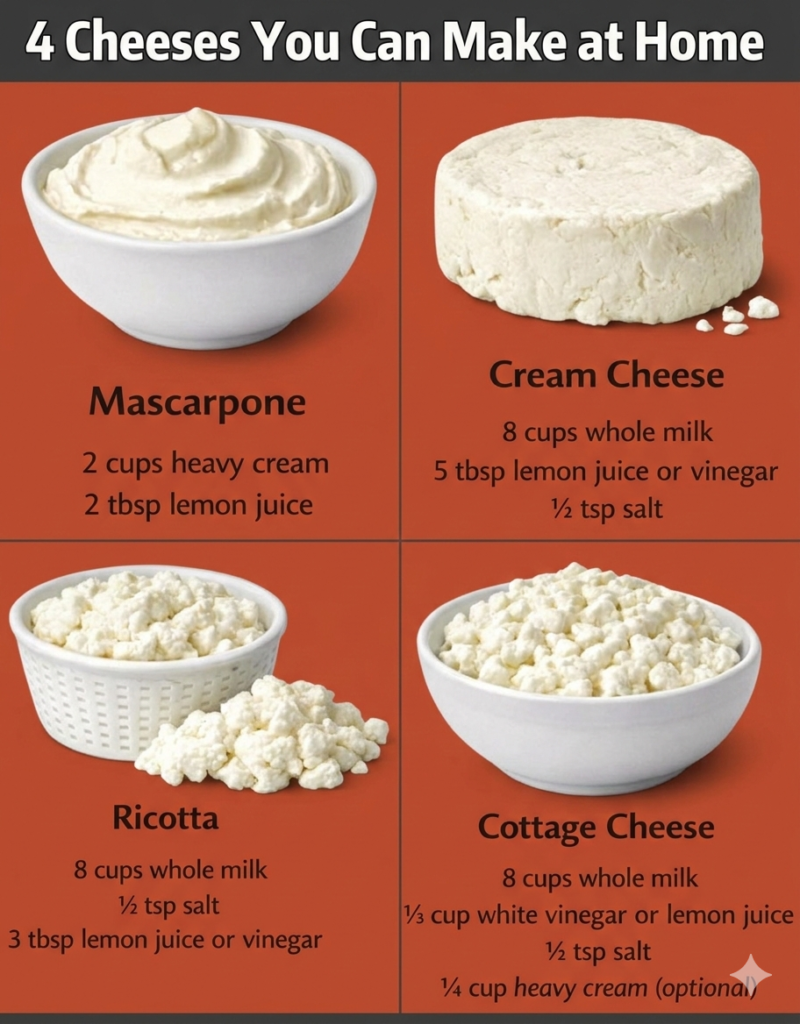
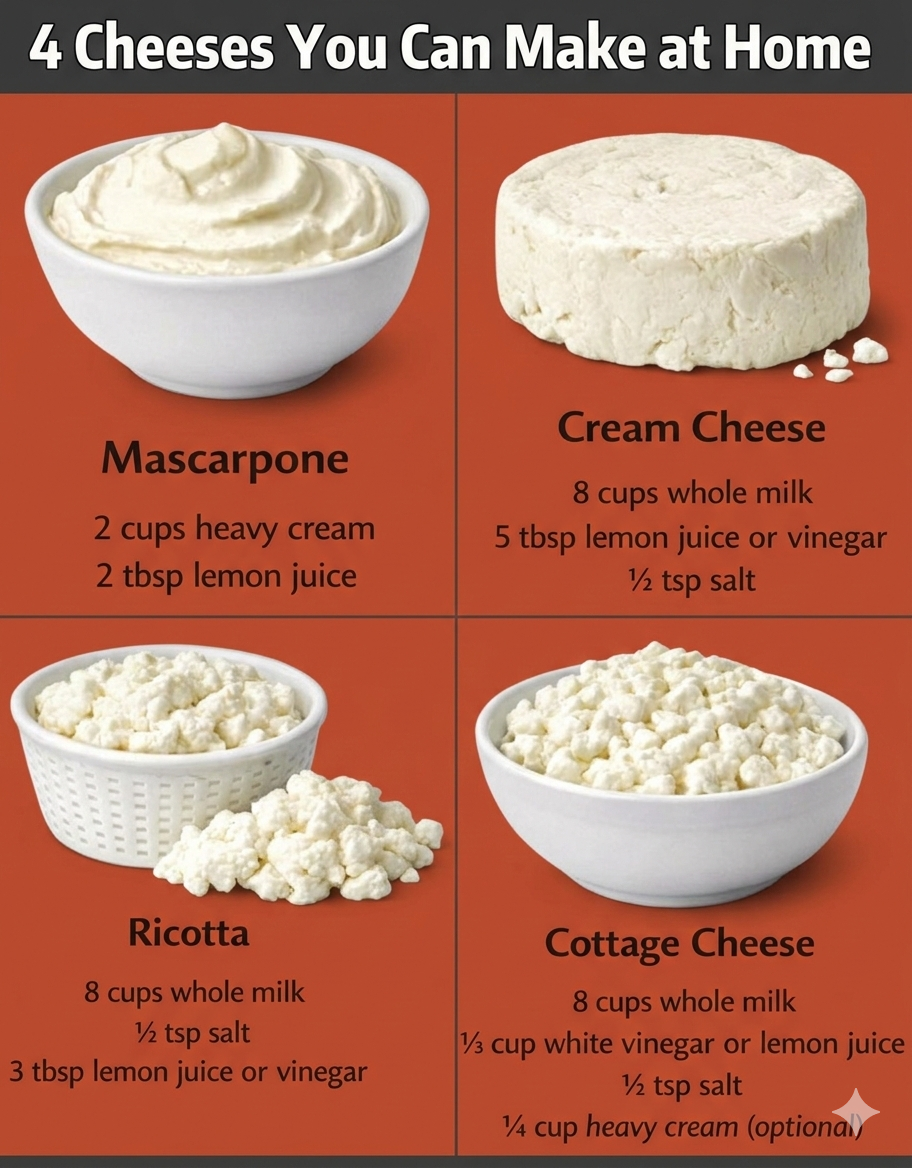
1. MascarponeThe secret to this rich, velvety Italian cheese is gentle heating and patience.
Instructions:
Heat the heavy cream in a double boiler (or a bowl over simmering water) until it reaches about 85°C (185°F).
Stir in the lemon juice and continue to cook over low heat for about 5 minutes. The cream should thicken enough to coat the back of a spoon.
Remove from heat and let it cool to room temperature.
Line a strainer with several layers of cheesecloth, pour in the mixture, and refrigerate for 12–24 hours to drain the whey.
2. Cream CheeseThis version results in a fresh, spreadable cheese much better than store-bought blocks.
Instructions:
Bring the whole milk to a simmer in a large pot (just before it boils).
Turn off the heat and slowly stir in the lemon juice or vinegar.
Let it sit for 10 minutes until the milk curdles and separates.
Strain the mixture through a cheesecloth-lined sieve for about 15 minutes.
Transfer the solid curds to a food processor, add the salt, and blend until completely smooth and creamy.
3. RicottaRicotta is known for its light, fluffy texture and mild flavor.
Instructions:
Mix the whole milk and salt in a pot and heat until it is steaming and almost boiling.
Add the lemon juice or vinegar and stir gently once or twice. Turn off the heat.
Let it sit undisturbed for 15 minutes to allow large curds to form.
Using a slotted spoon, gently lift the curds into a lined strainer.
Drain for 15–30 minutes depending on how dry you like it.
4. Cottage CheeseUnlike Ricotta, Cottage Cheese keeps its distinct “curd” shape by being rinsed.
Instructions:
Heat the whole milk and add the vinegar/lemon juice to create curds, similar to the Ricotta method.
Once curds form, use a knife to gently “cut” them into small cubes while still in the pot.
Drain the curds in a strainer and rinse them with cold water.
This stops the cooking and removes the acidic taste.
Place the curds in a bowl, stir in the salt, and fold in the heavy cream for that classic chunky texture.
Quick Tip:
Use “Pasteurized” milk rather than “Ultra-Pasteurized” (UHT) milk if possible. UHT milk is heated so high that the proteins sometimes fail to bond into firm curds!