1. The Preparation (The Foundation)
- Bring to Room Temp: Take the steak out of the fridge 30–60 minutes before cooking. If the meat is ice-cold in the center, the outside will burn before the inside reaches the right temperature.
- The “Bone-Dry” Rule: Use paper towels to pat every side of the steak until it is completely dry. Moisture creates steam; dryness creates that beautiful brown crust (the Maillard reaction).
- Seasoning: Use more salt than you think you need. Coarse Kosher salt and freshly cracked black pepper are essential. Season the edges of the steak as well, not just the flat sides.
2. The Equipment & Oil
- The Pan: A Cast Iron Skillet is the gold standard because it holds intense heat. If you don’t have one, use the heaviest stainless steel pan you own.
- The Oil: Use an oil with a high smoke point (Avocado, Grapeseed, or Canola oil). Do not use extra virgin olive oil or butter for the initial sear, as they will smoke and turn bitter at high heat.
3. The Searing Process
- The Heat: Get the pan ripping hot. The oil should be shimmering and just starting to produce a faint wisp of smoke.
- The Sear: Lay the steak away from you to avoid splashes. Press it down slightly with a spatula to ensure total contact with the metal.
- The Flip: Flip the steak every 60 seconds. This modern technique ensures the interior cooks evenly (preventing the “grey ring” of overcooked meat) while building a thick, crunchy crust on both sides.
4. The Butter Baste (The Flavor Bomb)
When your steak is about 2–3 minutes away from being finished, it’s time for the “Basting” technique:
- Turn the heat down to medium.
- Add 3 tablespoons of unsalted butter, 3 crushed garlic cloves, and fresh thyme or rosemary to the pan.
- Tilt the pan so the butter pools at the bottom with the herbs. Use a large spoon to continuously pour that bubbling, fragrant butter over the steak. This adds deep nutty flavors and keeps the meat incredibly moist.
5. Checking for Doneness
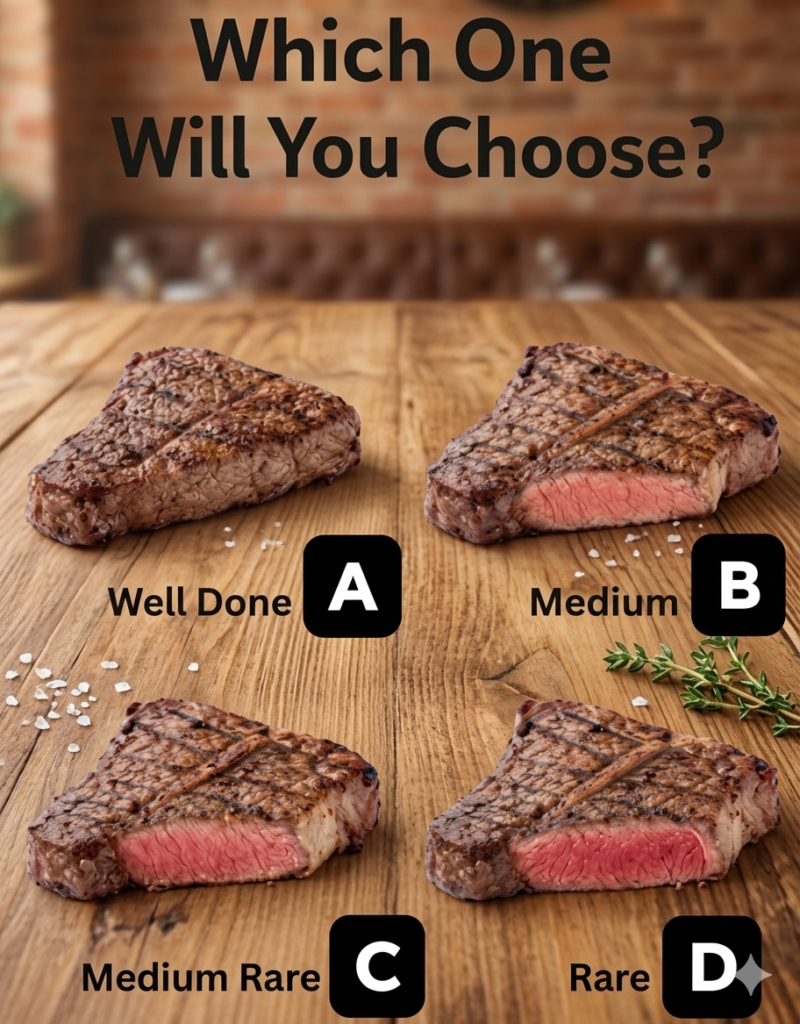
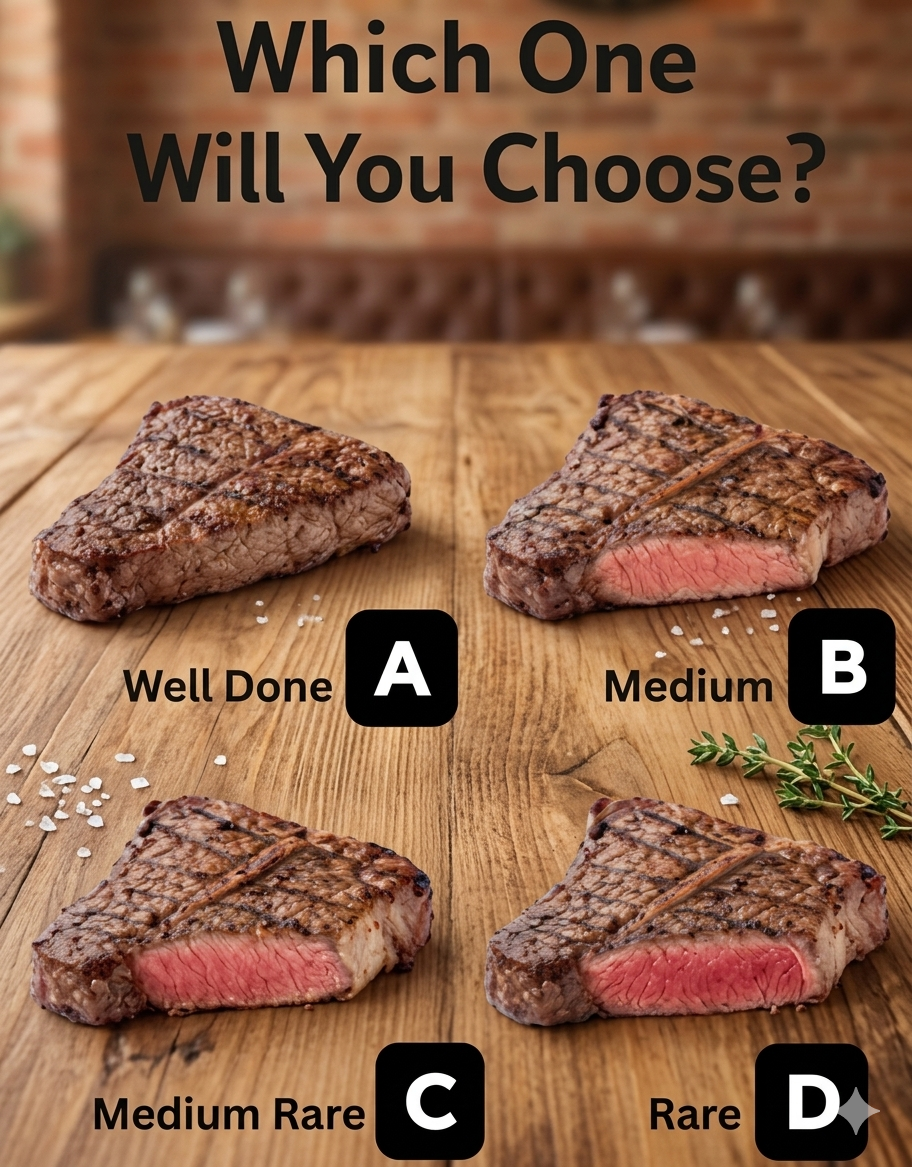
To match the levels in your photo, use an instant-read thermometer for the best accuracy:
- Rare (D): Pull at 120°F (49°C) — Bright red, cool center.
- Medium Rare (C): Pull at 130°F (54°C) — Warm, red/pink center.
- Medium (B): Pull at 140°F (60°C) — Rich pink throughout.
- Well Done (A): Pull at 155°F (68°C) — Brown throughout, very firm.
6. The Essential Rest
Do not cut the steak immediately. If you cut it now, all the delicious juices will run out onto the board, leaving the meat dry.
- Transfer the steak to a warm plate or wooden board.
- Let it rest for at least 8–10 minutes. This allows the muscle fibers to relax and reabsorb the juices.
Final Touch
Always slice the steak against the grain (perpendicular to the visible muscle lines). This breaks up the fibers and makes even a tougher cut feel like it’s melting in your mouth. Enjoy!