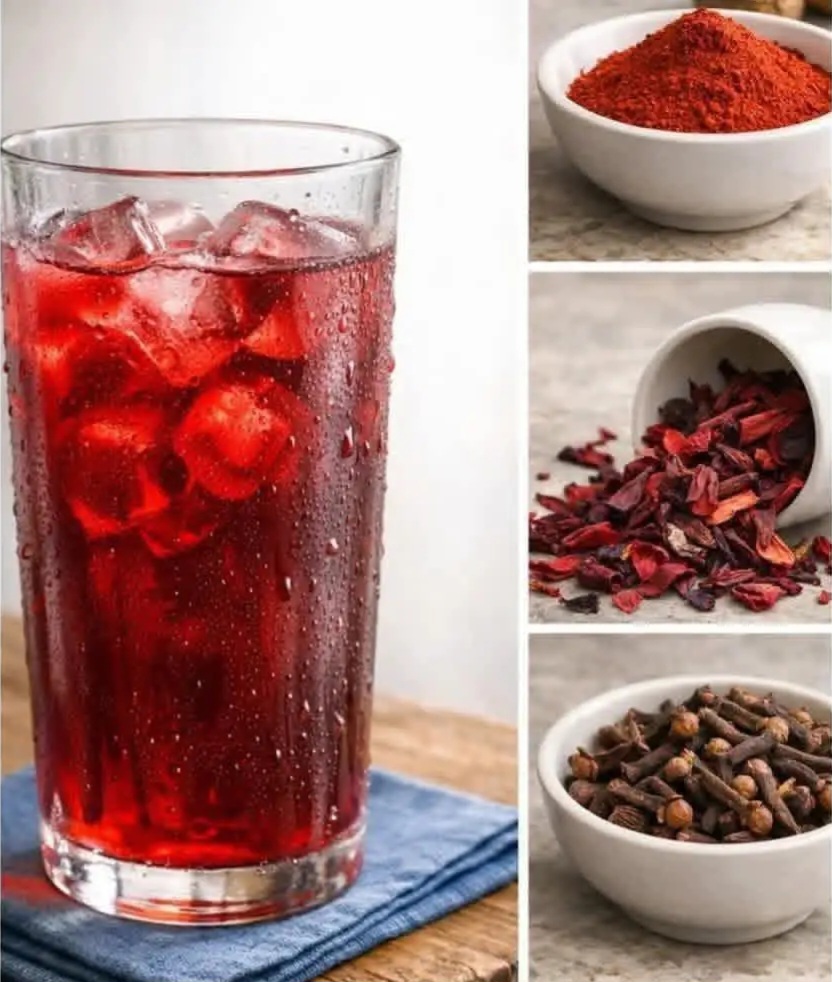
A refreshing, jewel-toned infusion that tastes like summer in a glass
There are drinks you make, and there are drinks you craft. This is the second kind. It’s the Middle Eastern classic “Karkade” — but we’re slowing it down, layering it, and giving it the elegance it deserves. The result is tart and floral from the hibiscus, warmed through with sweet spice from the cloves, and crowned with that impossible ruby color that makes every glass feel like a small celebration.
Ingredients You Will Need
For the Tea Concentrate:
- 1 cup dried hibiscus petals, loosely packed. Choose petals that are deep burgundy to purple, not brown. This is also sold as karkade, sorrel, or flor de Jamaica in different markets. • 8 to 10 whole cloves. Don’t use ground cloves here. We want their slow, perfumed warmth, not a dusty bite. • 4 cups filtered water. Good water makes good tea. Tap water with heavy chlorine will flatten the floral notes. • 1 teaspoon hibiscus powder, optional. This is the secret for that extra-deep, luminous red you see in the photo. It intensifies both color and flavor.
To Finish and Serve: - ½ to ¾ cup granulated sugar, or honey, depending on how sweet you like it. Start with ½ cup. You can always add more, but you can’t take it out. • 2 cups cold filtered water, for diluting the concentrate to drinking strength. • A generous amount of ice cubes. This drink is meant to be served arctic-cold. • Fresh lemon wheels, orange slices, or mint sprigs, for garnish. Optional, but the citrus oil from a lemon wheel changes the whole experience. The Method: Where Patience Becomes Flavor
Step 1: Awaken the Spices
Place a small, dry saucepan over low heat. Add the whole cloves and let them toast for 30 to 45 seconds. Stay with them. The moment you smell that warm, sweet, almost medicinal scent rise up, they are ready. This 45-second step is the difference between a flat drink and a complex one. Toasting wakes up the essential oils that boiling water alone can’t fully release.
Step 2: The Bloom
Pour the 4 cups of filtered water into the pan with the toasted cloves. Bring it to a gentle, rolling boil. As soon as it boils, kill the heat completely. Now add the dried hibiscus petals and the optional teaspoon of hibiscus powder.
Put a lid on the pot immediately. This traps the steam and the volatile floral compounds. Set a timer for 15 to 20 minutes and walk away. This is not the time to rush. During this steep, the petals will surrender their color and their signature tart, cranberry-like soul to the water. When you lift the lid, the liquid should be opaque and the color of a garnet gemstone.
Step 3: Strain and Sweeten with Intention
Set a fine-mesh strainer over a large heatproof pitcher or bowl. Pour the infusion through it, and with the back of a spoon, gently press the softened petals. Don’t mash them aggressively — you want flavor, not bitterness from broken plant matter.
While the liquid is still warm, add your sugar or honey. Stir slowly until every granule dissolves completely. Sweetening it warm is non-negotiable. Sugar dissolves cleanly in heat. In cold liquid it just sinks and gives you a gritty first sip and a syrupy last one.
Step 4: The Chill and The Wait
Now pour in the 2 cups of cold filtered water. This dilutes your strong concentrate into a balanced, drinkable tea. Stir, and then taste it. This is your moment to be the editor. Too strong? Add a splash more water. Too tart for your mood today? Dissolve another spoon of honey in a tiny bit of hot water, then stir it in.
Cover the pitcher and place it in the refrigerator for a minimum of 2 hours. Overnight is better. Hibiscus tea is one of those rare things that gets better as it sits. The edge of the tartness softens, the clove warms into the background, and everything melds into one coherent, elegant flavor.
Step 5: The Serving Ritual
Take your tallest, clearest glasses. Fill them to the very top with ice. The sound of the ice hitting the glass is part of the recipe. Pour the chilled hibiscus tea over the ice and watch the way the condensation immediately blooms on the outside of the glass.
Finish it. Take a wheel of orange, make a small cut from the center to the rind, and perch it on the rim of the glass. Or drop a few fresh mint leaves into the drink and give it one gentle stir to bruise them and release their scent.
A Few Final Truths About This Recipe
Why we don’t boil the hibiscus: Boiling dried flowers makes them bitter and murky. We boil the water, then let the flowers steep off the heat. We want a clean, bright, jeweled tartness, not a stewed one.
Why the cloves matter: On its own, hibiscus is one-note: sour. The cloves add a bass note. It’s warm, slightly sweet, and vaguely reminiscent of cola. It gives the drink a backbone.
How to store it: Keep the unsweetened concentrate in a sealed jar in the fridge for up to a week. Dilute and sweeten glasses as you need them. The already-diluted and sweetened tea is best within 3 days.
This isn’t just hydration. It’s a pause. It’s the drink you make when you want the afternoon to feel a little more intentional.
Let me know if you’d like a version with fresh ginger, or how to turn this into a non-alcoholic spritzer for gatherings.